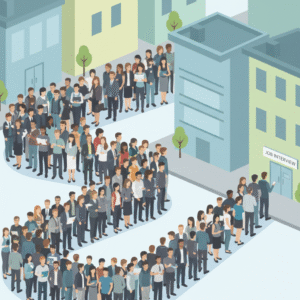
Across the U.S., a quiet crisis is taking shape inside offices, kitchen-table home offices, warehouses, clinics, and Zoom rooms. It isn’t a wave of pink slips—though those exist too—it’s the growing belief among workers that a layoff is no longer a distant possibility but an almost expected event. This dread is reshaping how people think, work, and behave, and according to recent surveys, it’s far more widespread than most leaders are acknowledging.
A series of new reports show just how deeply this anxiety runs. One survey cited by CNBC found that one in three American adults now says they have layoff anxiety, while a separate Harris Poll with Indeed found that nearly half of U.S. workers expect layoffs in the coming year. Some research goes even further: MyPerfectResume’s national survey revealed that more than 80% of workers fear losing their job in 2025. What’s striking is not just the numbers—but the emotional weight behind them. People aren’t imagining things. They’re picking up on real signals in the economy: cooling job openings, slower hiring cycles, and companies quietly trimming costs even if they’re not announcing marquee layoffs.
But the part nobody really talks about is what this fear is doing to people’s day-to-day behavior. Layoff anxiety has become a silent accelerator of burnout. In interviews and expert commentary reported by CNBC, career coaches describe workers pushing themselves into unsustainable routines—logging on earlier, staying later, and squeezing productivity out of every minute. Some admit they’re not even sure the extra work helps. They just don’t want to look replaceable. The fear of being laid off has collided with a culture that already struggles with overwork, producing a new kind of burnout not driven by ambition or external pressure, but by sheer survival instincts.
This is reshaping workplace psychology in profound ways. If the first half of the decade was defined by the Great Resignation and a worker-friendly labor market, today’s environment feels closer to the Great Retrenchment. People are clinging to their jobs—even the ones they dislike—because the perceived risk of jumping is too high. Forty percent of workers say they’re unhappy in their current roles but feel trapped because any new position might be more unstable. Worry about layoffs isn’t just a financial fear; it’s a fear of chaos, of losing structure, identity, and the stability that work is supposed to provide.
What makes this moment especially tough is that workers feel they can’t talk about their fears openly. Layoff anxiety can feel like a personal weakness, even though the numbers show it’s nearly universal. Many hide the stress from coworkers, partners, and even themselves, which only compounds the exhaustion. Add in a weakening job market—where people who are laid off say it’s harder to find meaningful traction—and no wonder the psychological strain is rising.
The combination of job insecurity and burnout is forming a feedback loop: fear of layoffs leads to overwork, which leads to burnout, which leads to poorer performance, which increases fear of layoffs. It’s a cycle that’s emotionally brutal and difficult to interrupt. Yet breaking the silence around it may be the first step. Acknowledging that this fear is widespread—not a personal flaw—helps people reclaim some sanity and perspective. It also forces companies to confront an uncomfortable truth: layoff anxiety is shaping their workforce’s mental health and productivity far more than any policy memo or announcement.
There’s no quick fix, but there is empowerment in awareness. The more workers understand the forces behind this collective anxiety, the better equipped they are to navigate it—whether by setting healthier boundaries, quietly preparing for career pivots, or simply recognizing that feeling worried right now is not irrational. It’s human. The quiet crisis is real, but so is the possibility of facing it with clarity instead of fear.